Throughout my career in sales and sales leadership, one principle has remained constant: customers remember how you make them feel long after they forget the details of the transaction.
Products change. Technology changes. Competitors change. Pricing changes. But great customer service never goes out of style.
I have always believed that being truly customer-centric isn't a slogan or something you put on a company website. It is a way of doing business. It means listening before talking, communicating consistently, following through on commitments, finding solutions instead of excuses, and doing the little things that customers don't necessarily expect.
Those little things can become your biggest competitive advantage.
When Everyone Sells a Great Product, What Separates You?
HVAC provides a perfect example.
Consider the ductless mini-split market. Mitsubishi Electric has built an outstanding reputation in the industry, and in many markets a homeowner or commercial customer may have several contractors offering Mitsubishi systems. Many of those companies may also be Mitsubishi Diamond Contractors.
So, from the customer's perspective, the choices can begin to look very similar: the same manufacturer, similar equipment, qualified contractors, comparable warranties, and potentially even similar pricing.
How do you separate yourself?
The answer isn't always the equipment. It's the experience you create around it.
When everyone can sell the product, the salesperson and the company become the differentiator.
Start by Listening
One of the most important skills in sales is also one of the simplest: listen.
Too many salespeople begin thinking about their answer while the customer is still explaining the problem. I have always tried to approach the conversation differently.
Why did the customer call? What problem are they actually trying to solve? Is comfort the priority? Energy efficiency? Noise? Humidity? A room that is always too hot or too cold? An addition without ductwork? Lower operating costs? Better control over individual spaces?
Sometimes what a customer initially asks for isn't necessarily what they ultimately need. You can't know that unless you listen.
A great salesperson isn't simply there to sell equipment. Your responsibility is to understand the customer's situation well enough to help them make the right decision. That requires asking good questions—and then actually listening to the answers.
Have a “Never Say No” Attitude
I've always believed in what I call a “never say no” attitude. That doesn't mean making promises you can't keep. It means that when a customer asks for something difficult, your first reaction shouldn't be, “We can't do that.” Instead, it should be, “Let me see what we can do.”
There will always be situations where the exact request isn't possible. Equipment may not be available. A particular application may not work. A deadline may be unrealistic. But even then, there is usually another question worth asking: What can we do?
Maybe there's another product. Maybe there's another design. Maybe there's a temporary solution. Maybe another department, distributor, contractor, or manufacturer representative can help. Customers notice the people who make the extra phone call.
Communication Is Customer Service
Some of the biggest customer-service failures aren't caused by bad products. They're caused by poor communication.
The quote was promised Tuesday and didn't arrive. Nobody called back. The equipment was delayed, but nobody told the customer. The installation date changed and the customer found out at the last minute.
None of these problems necessarily require a huge investment to fix. They require communication.
If you tell a customer you'll call Tuesday, call Tuesday—even if you don't have the answer yet. Sometimes the best update is simply: “I don't have the final answer yet, but I wanted you to know I'm still working on it.”
That 30-second phone call can mean more to a customer than people realize.
Follow-Up Is One of the Most Underrated Sales Skills
Following up shouldn't stop when the purchase order is signed.
Did the equipment arrive? How did the installation go? Is the system performing as expected? Is there anything else the customer needs?
A simple follow-up call after the sale tells the customer something important: I wasn't only interested in getting your business. I'm interested in keeping it.
That is how transactions become relationships. And relationships are how businesses are built.
Under-Promise and Over-Deliver
I have always preferred to set realistic expectations and then find opportunities to exceed them.
If something should take seven days, don't promise three just because you think that's what the customer wants to hear. Delivering in five days after promising seven creates a completely different experience than delivering in five days after promising three.
Same result. Completely different customer perception.
Trust is built when your word means something.
Going Above and Beyond Doesn't Have to Be Complicated
Exceptional customer service is often surprisingly simple.
- Return the phone call.
- Answer the email.
- Show up when you said you would.
- Remember what the customer told you during the previous conversation.
- Take ownership of a problem instead of passing it to someone else.
- Call after the installation.
- Explain something the customer doesn't understand.
- Find an answer when you don't immediately have one.
- Say thank you.
None of these things are revolutionary. That's precisely why they're so powerful. They are easy to do—and yet they are not done consistently.
The Real Competitive Advantage
Let's return to the Mitsubishi example. Imagine three Diamond Contractors proposing comparable systems for the same project. All three companies have trained technicians. All three have access to quality equipment. All three can perform the installation.
What determines who earns the customer's business?
Often, it comes down to everything surrounding the equipment. Who listened? Who asked the best questions? Who responded quickly? Who explained the options clearly? Who followed up? Who made the customer feel important? Who did what they said they were going to do? Who went one step further than expected?
The equipment may get you into the conversation. The customer experience is what wins the relationship.
Customers Have Choices. Give Them a Reason to Choose You.
After years of working with customers, sales teams, contractors, distributors, and manufacturers, I continue to believe that long-term success comes back to a relatively simple philosophy:
Listen carefully. Communicate consistently. Follow through. Solve problems. Keep your commitments. And whenever possible, do a little more than the customer expects.
You don't need to make customer service complicated. You just need to make it consistent.
Because when products, pricing, and capabilities start looking similar, the little things aren't really little things anymore. They are the difference.
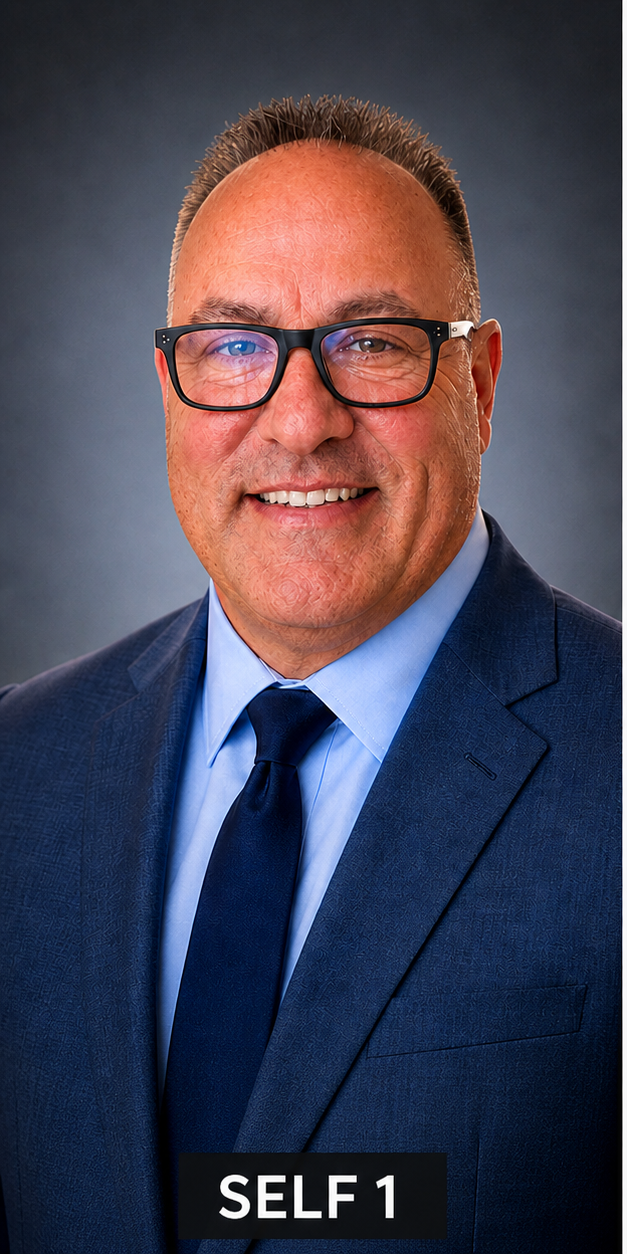
Joseph V. Raymond
Joe Raymond is an HVAC and sales leadership executive with experience across residential and commercial HVAC, sales development, distribution, manufacturing, and complex technical markets. His leadership philosophy centers on customer experience, accountability, communication, and building long-term relationships.
More about Joe →